LV Quan Environmental Protection Engineering Technology Co.、Ltd。
  • 家
  • 製品
    • 装置
    • エンジニアリング
    • アクセサリー
  • ソリューション
    • 石油化学産業
    • 製薬、化学産業
    • コーティング業界
    • 機械産業
    • 絵画産業
    • エレクトロニクス業界
  • 能力
    • R&D
    • サービス
    • 製造
  • 私たちについて
    • 証明書
    • 工場
  • ニュース
    • 会社のニュース
    • 業界のニュース
    • 展示ニュース
  • お問い合わせ
LV Quan Environmental Protection Engineering Technology Co.、Ltd。
  • 日本語
  • Latine
  • 한국어
  • ไทย
  • বাংলা
  • Hrvatski
  • čeština
  • dansk
  • Nederlands
  • Deutsch
  • Pilipino
  • Indonesia
  • Suomalainen
  • italiano
  • Gaeilge
  • Bahasa Melayu
  • norsk
  • فارسی
  • Polskie
  • Português
  • Română
  • Slovák
  • Türk
  • svenska
  • Tiếng Việt
LV Quan Environmental Protection Engineering Technology Co.、Ltd。

Webメニュー

  • 家
  • 製品
    • 装置
    • エンジニアリング
    • アクセサリー
  • ソリューション
    • 石油化学産業
    • 製薬、化学産業
    • コーティング業界
    • 機械産業
    • 絵画産業
    • エレクトロニクス業界
  • 能力
    • R&D
    • サービス
    • 製造
  • 私たちについて
    • 証明書
    • 工場
  • ニュース
    • 会社のニュース
    • 業界のニュース
    • 展示ニュース
  • お問い合わせ

製品検索

言語

  • 日本語
  • Latine
  • 한국어
  • ไทย
  • বাংলা
  • Hrvatski
  • čeština
  • dansk
  • Nederlands
  • Deutsch
  • Pilipino
  • Indonesia
  • Suomalainen
  • italiano
  • Gaeilge
  • Bahasa Melayu
  • norsk
  • فارسی
  • Polskie
  • Português
  • Română
  • Slovák
  • Türk
  • svenska
  • Tiếng Việt

共有

メニューを終了します

  • 業界のニュース
    家 / ニュース / 業界のニュース / What is the removal efficiency of the Organic Waste Gas Treatment Equipment?

What is the removal efficiency of the Organic Waste Gas Treatment Equipment?

Over 95% Removal Efficiency Is Achievable with Advanced Organic Waste Gas Treatment Equipment

Yes, modern organic waste gas treatment equipment can consistently achieve removal efficiencies exceeding 95% for Volatile Organic Compounds (VOCs). For well-engineered systems such as regenerative thermal oxidizers (RTO) or combined adsorption-concentration + incineration units, efficiencies of 98-99% are common under proper operating conditions. The key lies in selecting the right technology, maintaining optimal parameters, and integrating pre-treatment steps.

For example, at Lv Quan Environmental Protection Engineering Technology Co., Ltd., our RTO systems and adsorption-desorption catalytic combustion units routinely demonstrate removal rates of 96-99% in real-world applications across automotive, petrochemical, and printing industries. Lower efficiencies (below 80%) typically indicate mismatched technology, improper maintenance, or variable inlet loadings.

How to Achieve Over 95% Removal Efficiency: Critical Factors

Attaining and sustaining >95% removal efficiency requires a systematic approach. Based on our 30+ years of VOCs equipment design and manufacturing, the following five pillars are essential:

  • Proper technology selection: Match the waste gas stream (flow rate, concentration, temperature, humidity, particulate loading) with the optimal treatment method. For medium-to-high concentration (500-5000 mg/m³), RTO achieves 95-99%. For low concentration large-volume streams, a rotor concentrator + RTO/CO is superior.
  • Pre-treatment integrity: Remove particulate matter, acid gases, and sticky oils before the main unit. A well-designed pre-treatment system (e.g., dry filters, scrubbers) protects the core media and prevents efficiency decay. Data shows that without pre-treatment, efficiency drops by 0.5-1% per month due to fouling.
  • Optimal thermal or adsorption parameters: For thermal oxidizers, maintain combustion temperature at 760-850°C with sufficient residence time (0.5-1.0 seconds). For adsorption systems, control inlet relative humidity below 60% and use high-grade activated carbon or zeolite with >700 m²/g surface area.
  • Real-time monitoring and control: Install continuous emission monitoring systems (CEMS) with PID or FID sensors. Closed-loop PLC control adjusts damper positions, temperature setpoints, and airflow rates instantly. Facilities using automated control report 5-8% higher average efficiency than manual operations.
  • Regular maintenance & media replacement: For adsorption wheels or carbon beds, schedule regeneration or replacement based on breakthrough curves – typically every 2-3 years for carbon, 5-7 years for zeolite rotors. Thermal systems require quarterly burner and ceramic media inspections.

At Lv Quan, our integrated systems (e.g., adsorption + catalytic combustion) have demonstrated stable 97% efficiency over 3-year continuous operation in a pharmaceutical solvent recovery project, with monthly performance deviation under ±1.5%.

Removal Efficiency Comparison: Common Organic Waste Gas Treatment Technologies

Different technologies yield varying removal efficiencies. The table below summarizes typical performance ranges based on field data from over 200 installed systems by Lv Quan Environmental Protection Engineering Technology Co., Ltd.

Table 1: Typical VOC removal efficiency ranges for common treatment technologies (based on real operating data)
Technology Typical Removal Efficiency Best Applicable Concentration Range Energy Consumption (relative)
Regenerative Thermal Oxidizer (RTO) 95-99% 500 - 5000 mg/m³ Moderate-High
Catalytic Oxidizer (CO) 90-98% 300 - 3000 mg/m³ Moderate
Activated Carbon Adsorption (non-regenerative) 85-92% (initial), decays to <70% < 1000 mg/m³ Low
Zeolite Rotor + RTO/CO 93-97% (overall) 100 - 1500 mg/m³ (large volume) Low-Moderate
Biological Filtration 60-85% < 300 mg/m³, water-soluble VOCs Very Low

As shown, RTO and RTO-combined systems deliver the highest and most stable removal rates, making them the preferred choice for stringent emission regulations (e.g., ≥95% efficiency required by many local permits).

Frequently Asked Questions (FAQs) on Organic Waste Gas Treatment Equipment Efficiency

1. Can removal efficiency ever reach 99% in real-world conditions?

Yes. For example, Lv Quan's RTO systems treating printing press exhaust (ethanol, ethyl acetate, ~1800 mg/m³) achieved 99.2% removal efficiency during a 72-hour continuous compliance test. The key is maintaining combustion temperature at 820°C with a ceramic media heat recovery efficiency >95%.

2. Why does my current system show only 70-80% efficiency?

Common causes include: (a) Inadequate pre-treatment leading to catalyst or adsorbent poisoning; (b) Combustion temperature below 700°C for thermal units; (c) Channeling in adsorption beds due to uneven airflow; (d) Overloaded inlet concentration beyond design capacity. A site audit by an experienced provider (like Lv Quan, with 30+ years in VOCs design) typically identifies the bottleneck.

3. How often should I measure removal efficiency to ensure >95% compliance?

For continuous monitoring, install a CEMS with hourly average reporting. For periodic verification, conduct stack sampling monthly or quarterly. Our experience shows that systems with weekly PID spot checks maintain efficiency 3-5% higher than those checked only quarterly.

4. Does humidity affect adsorption-based organic waste gas treatment equipment efficiency?

Significantly. For activated carbon systems, relative humidity above 60% reduces adsorption capacity by up to 40%. For zeolite rotors, the effect is less but still notable: >75% RH can lower efficiency by 15-20%. Always include a dehumidification or pre-cooling step when treating humid exhaust.

5. What is the typical efficiency guarantee from a professional manufacturer like Lv Quan?

We contractually guarantee ≥95% removal efficiency for RTO and adsorption-concentration systems under design conditions, with a performance test within 30 days of commissioning. For projects requiring ultra-low emissions, we offer 98% guarantee with a 3-year warranty on core components (ceramic media, heat exchangers, control valves).

Real-World Case: Achieving 96.8% Efficiency in a Pharmaceutical Coating Line

A pharmaceutical client in Jiangsu Province (China) faced VOC emissions of 1200 mg/m³ (mainly ethanol, isopropanol, and dichloromethane) from a tablet coating line. Their existing carbon adsorber delivered only 68% efficiency, failing local standards. Lv Quan Environmental Protection Engineering Technology Co., Ltd. designed and installed a pre-filter + two-stage zeolite rotor concentrator + RTO system.

Results after 6 months of operation:

  • Average removal efficiency: 96.8% (range 95.2% – 98.1%)
  • Outlet concentration consistently below 40 mg/m³, exceeding local limit of 80 mg/m³
  • Energy recovery from RTO reduced natural gas consumption by 37% compared to a standard thermal oxidizer
  • System uptime: 99.3% over 6 months, with only scheduled maintenance

This case demonstrates that with proper engineering, even challenging pharmaceutical streams can achieve >95% efficiency reliably.

Summary: Key Actions to Maintain >95% Removal Efficiency

To summarize the practical steps for achieving and sustaining high performance in organic waste gas treatment equipment:

  1. Perform a detailed waste gas characterization (flow, concentration, humidity, particulate, temperature, VOC species).
  2. Select the appropriate core technology – for >95% target, prefer RTO or zeolite rotor + RTO/CO.
  3. Include robust pre-treatment: dry particulate filter (G4 to F9) and optional acid/alkali scrubber.
  4. Install online monitoring for temperature, pressure drop, and outlet concentration.
  5. Follow a manufacturer-recommended maintenance schedule – Lv Quan provides detailed checklists with every system.
  6. Train operators on the specific control logic and emergency procedures.

By adhering to these guidelines, industrial facilities can confidently meet the most stringent emission standards while optimizing operating costs. As a specialized organic waste gas treatment equipment factory with ISO9001, ISO14001 certifications and over 30 years of VOCs expertise, Lv Quan Environmental Protection Engineering Technology Co., Ltd. remains committed to delivering reliable, high-efficiency solutions tailored to each client's unique exhaust profile.

前の投稿 What Is Fixed Bed Zeolite Adsorption Catalytic Oxidation?
次の投稿 How does VOCs organic waste gas treatment engineering equipment prevent the risks of fire and explosion?

関連製品

  • LQ-Adw Zeolite回転ドラム(シリンダータイプ)

    LQ-Adw Zeolite回転ドラム(シリンダータイプ)

    Cat:装置

    可変枠ゼオライトターンテーブルの概要 当社のゼオライト濃度ターンテーブルは、ゼオライトモジュールの組み合わせを使用しており、ゼオライト含有量が高い、吸着率が高い、吸着速度が高くなっています。独自の技術によって処理され、脱着中に熱耐性を高め、より徹底的に脱着します。特別な構造によ...

    詳細を参照してください
  • LQ-SWI固形廃棄物焼却炉

    LQ-SWI固形廃棄物焼却炉

    Cat:装置

    概要 固形廃棄物の焼却炉は、高温燃焼を通じて廃棄物とガスに廃棄物に変換するように設計された固形廃棄物の管理に不可欠な装置であり、それにより環境を浄化します。これらの炉は、給餌システム、燃焼システム、熱回収システム、煙道ガス浄化システム、灰除去システムなど、いくつかの主要...

    詳細を参照してください
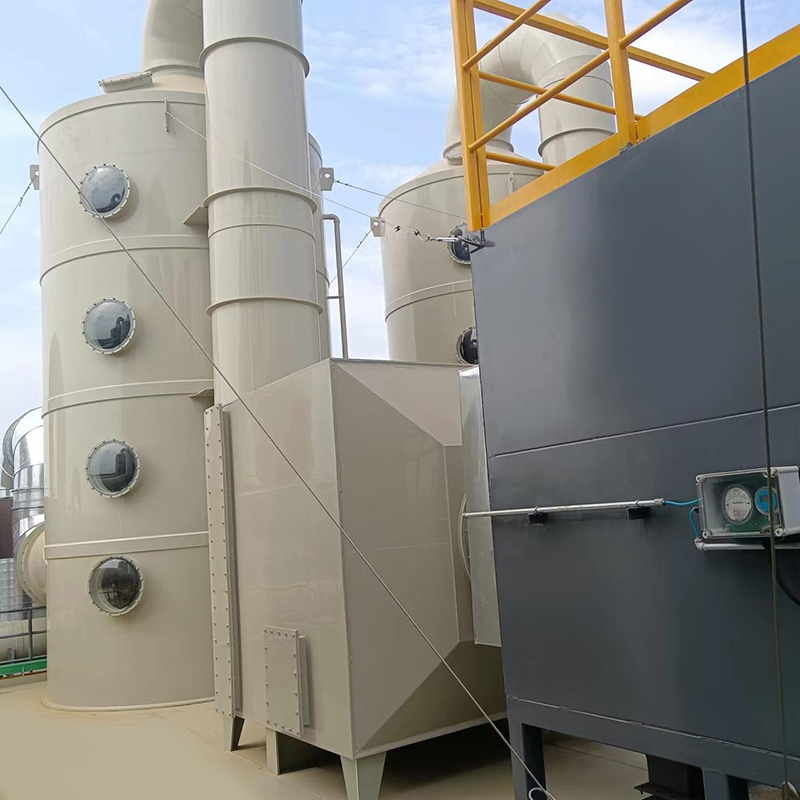
  • LQ-ACF活性炭繊維有機溶媒凝縮回収装置

    LQ-ACF活性炭繊維有機溶媒凝縮回収装置

    Cat:エンジニアリング

    活性炭繊維有機溶媒浄化回収装置の概要 活性炭繊維有機溶媒溶媒浄化回収システム(ACF)は、吸着剤培地として高品質の活性炭繊維を利用する環境保護装置です。マイクロコンピューターによって制御され、完全に自動化されたこのシステムは、振動の削減、音響断熱、爆発保護、過熱および過...

    詳細を参照してください
  • LQ-ADW-RTOゼオライトローター + RTO

    LQ-ADW-RTOゼオライトローター + RTO

    Cat:エンジニアリング

    ゼオライトホイールRTOシステムの概念 ゼオライトホイールを使用して有機廃棄ガスを吸着させると、低濃度と高容量廃棄物ガスが高濃度と小さな空気体積に集中し、それにより機器コストと運用コストが削減され、効率的なVOC処理が達成されます。 RTOは高温ガス熱交換を使用して、継続的な吸...

    詳細を参照してください
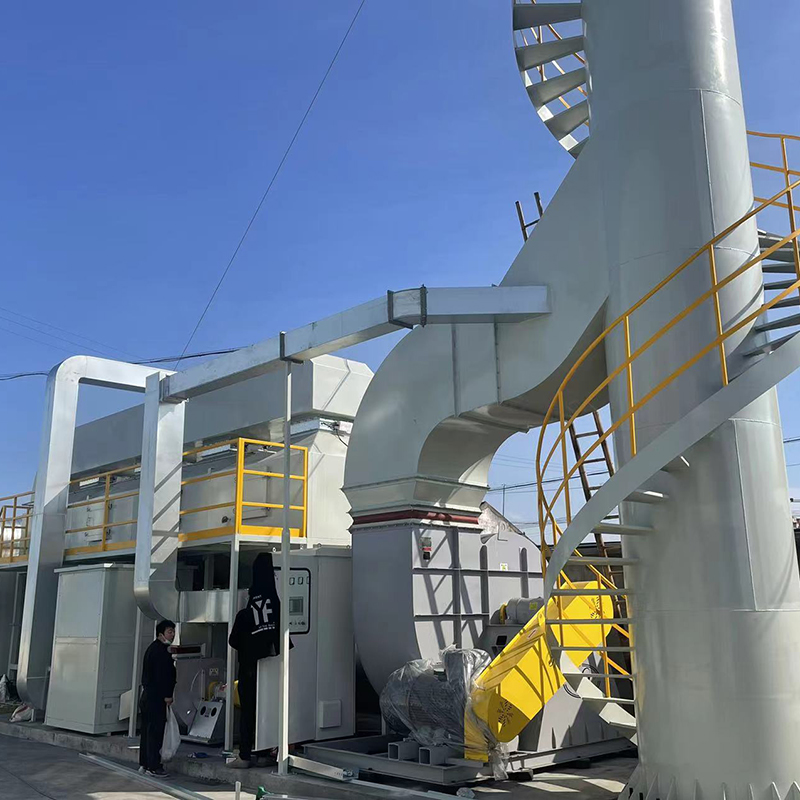
  • LQ-CFT-COハニカム活性炭素吸着 +触媒酸化(CO)

    LQ-CFT-COハニカム活性炭素吸着 +触媒酸化(CO)

    Cat:エンジニアリング

    VOC-CFT-CO吸着触媒精製装置 固定床ハニカム活性炭と触媒燃焼で構成されるVOC-CFT-CO吸着触媒精製装置は、有機ガス治療の経験20年近くの経験に基づいて当社が開発した新しいタイプの効率的で省エネ環境保護装置です。 LTは二次汚染から解放されており、多くのユーザーによ...

    詳細を参照してください
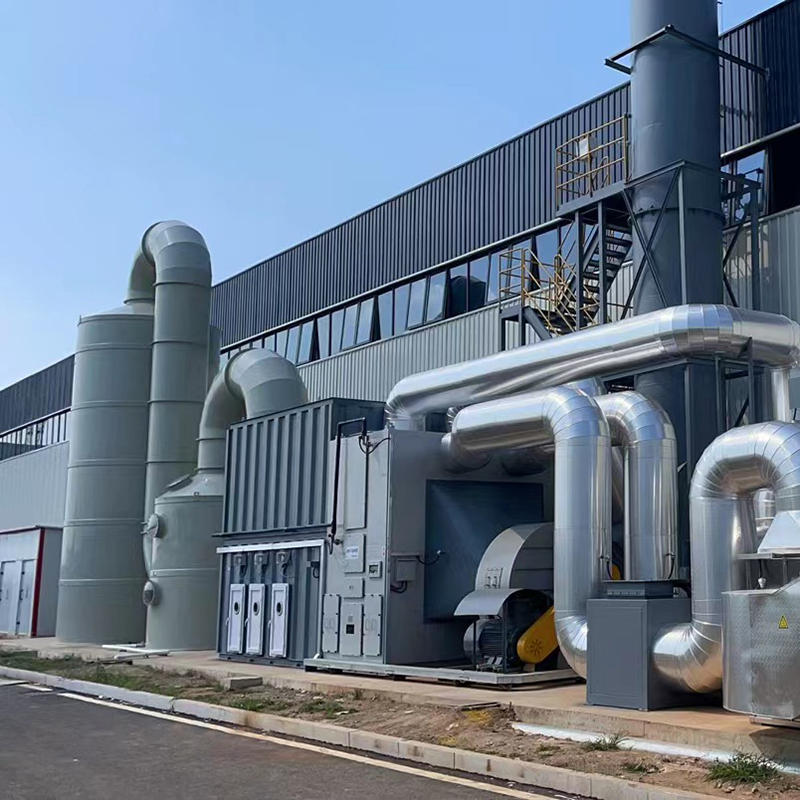
  • LQ-CF-CO固定ベッドゼオライト吸着 +触媒酸化(CO)

    LQ-CF-CO固定ベッドゼオライト吸着 +触媒酸化(CO)

    Cat:エンジニアリング

    一連の機器としての固定ベッドゼオライト触媒燃焼の概念 固定床ゼオライト触媒燃焼装置は、低濃度、断続的な生産(造船業など)、およびUV塗料やスチレンなどの揮発性有機化合物の濃度と吸着処理に適しています。継続的な安定した操作、治療空気量、治療廃棄物ガス濃度、排出濃度において独自の利...

    詳細を参照してください
  • LQ-ADW-COゼオライトロータリーコンセントレーター(円筒形/discタイプ)+触媒酸化(CO)

    LQ-ADW-COゼオライトロータリーコンセントレーター(円筒形/discタイプ)+触媒酸化(CO)

    Cat:エンジニアリング

    ゼオライト回転式ホイール触媒燃焼の概念は、一連の機器として 有機廃棄物ガスと廃棄ガス処理の組み合わせプロセスでは、ゼオライト回転式ホイール濃度吸着触媒燃焼装置は、主に高い空気量と低濃度の廃棄物ガスの処理に適しています。  そのコンポーネントには、触媒を毒する可能性のあるSINC...

    詳細を参照してください
  • LQ-Adw-to Zeoliteロータリーコンセントレーター(円筒形/ディスクタイプ)+熱酸化剤(to)

    LQ-Adw-to Zeoliteロータリーコンセントレーター(円筒形/ディスクタイプ)+熱酸化剤(to)

    Cat:エンジニアリング

    ゼオライトホイール直接燃焼の概念高温焼却装置 有機廃棄物ガスにロータリードラムゼオライトの吸着を使用する目的は、低濃度の大濃度の排気を高濃度の低容量の流れに集中させることです。このプロセスにより、機器のコストと運用費用が削減され、効率的なVOC治療が達成されます。高温脱着後、高...

    詳細を参照してください
  • LQ-GXF高温圧圧バルブ

    LQ-GXF高温圧圧バルブ

    Cat:アクセサリー

    目的 主に高温煙道ガスの比例換気に使用されます。 LTは、RTOやその他の高温煙の直接排出場所など、漏れレートの要件が高くない場所で広く使用されています。主に蝶のバルブ本体と一致する空気圧アクチュエータ(GT/RT/AT/AWシリーズ)で構成されており、低圧パイプライン培地のス...

    詳細を参照してください
  • LQ-WPG水平スプレーキャビネット

    LQ-WPG水平スプレーキャビネット

    Cat:アクセサリー

    概要 ウェットダスト除去の原理は、ガス液体の2相に完全に接触することにより、気相でダスト粒子を捕獲および分離するプロセスを使用します。 現在、一般的に使用される構造形式は次のとおりです。 1. 水貯蔵:一定量の水が設置され、高速粉塵を含むガスがヒットして...

    詳細を参照してください
カテゴリ
  • 装置
  • エンジニアリング
  • アクセサリー
US にお問い合わせください
クイックリンク
  • 家
  • 製品
    • 装置
    • エンジニアリング
    • アクセサリー
  • ソリューション
    • 石油化学産業
    • 製薬、化学産業
    • コーティング業界
    • 機械産業
    • 絵画産業
    • エレクトロニクス業界
  • 能力
    • R&D
    • サービス
    • 製造
  • 私たちについて
    • 証明書
    • 工場
  • ニュース
    • 会社のニュース
    • 業界のニュース
    • 展示ニュース
  • お問い合わせ
ニュース
  • What Materials Can Be Processed in an LQ-SWI Incinerator?
  • What Is Fixed Bed Zeolite Adsorption Catalytic Oxidation?
連絡してください

No.100 Central Avenue、南経済ニューレア、Gaoyou市、江蘇省、中国

E-MAIL : [email protected]

PHONE : +86-13382748801

TEL : +86-0514-84753397

携帯

wechat

LV Quan Environmental Protection Engineering Technology Co.、Ltd。

PDF

LV Quan Environmental Protection Engineering Technology Co.、Ltd。

Copyright © LV Quan Environmental Protection Engineering Technology Co.、Ltd。 All Rights Reserved.   VOCS有機廃棄物ガス処理工学機器メーカー

LV Quan Environmental Protection Engineering Technology Co.、Ltd。