LV Quan Environmental Protection Engineering Technology Co.、Ltd。
  • 家
  • 製品
    • 装置
    • エンジニアリング
    • アクセサリー
  • ソリューション
    • 石油化学産業
    • 製薬、化学産業
    • コーティング業界
    • 機械産業
    • 絵画産業
    • エレクトロニクス業界
  • 能力
    • R&D
    • サービス
    • 製造
  • 私たちについて
    • 証明書
    • 工場
  • ニュース
    • 会社のニュース
    • 業界のニュース
    • 展示ニュース
  • お問い合わせ
LV Quan Environmental Protection Engineering Technology Co.、Ltd。
  • 日本語
  • Latine
  • 한국어
  • ไทย
  • বাংলা
  • Hrvatski
  • čeština
  • dansk
  • Nederlands
  • Deutsch
  • Pilipino
  • Indonesia
  • Suomalainen
  • italiano
  • Gaeilge
  • Bahasa Melayu
  • norsk
  • فارسی
  • Polskie
  • Português
  • Română
  • Slovák
  • Türk
  • svenska
  • Tiếng Việt
LV Quan Environmental Protection Engineering Technology Co.、Ltd。

Webメニュー

  • 家
  • 製品
    • 装置
    • エンジニアリング
    • アクセサリー
  • ソリューション
    • 石油化学産業
    • 製薬、化学産業
    • コーティング業界
    • 機械産業
    • 絵画産業
    • エレクトロニクス業界
  • 能力
    • R&D
    • サービス
    • 製造
  • 私たちについて
    • 証明書
    • 工場
  • ニュース
    • 会社のニュース
    • 業界のニュース
    • 展示ニュース
  • お問い合わせ

製品検索

言語

  • 日本語
  • Latine
  • 한국어
  • ไทย
  • বাংলা
  • Hrvatski
  • čeština
  • dansk
  • Nederlands
  • Deutsch
  • Pilipino
  • Indonesia
  • Suomalainen
  • italiano
  • Gaeilge
  • Bahasa Melayu
  • norsk
  • فارسی
  • Polskie
  • Português
  • Română
  • Slovák
  • Türk
  • svenska
  • Tiếng Việt

共有

メニューを終了します

  • 業界のニュース
    家 / ニュース / 業界のニュース / How to Choose Organic Waste Gas Treatment Equipment?

How to Choose Organic Waste Gas Treatment Equipment?

Choose Based on Concentration, Flow Rate, and Recovery Value

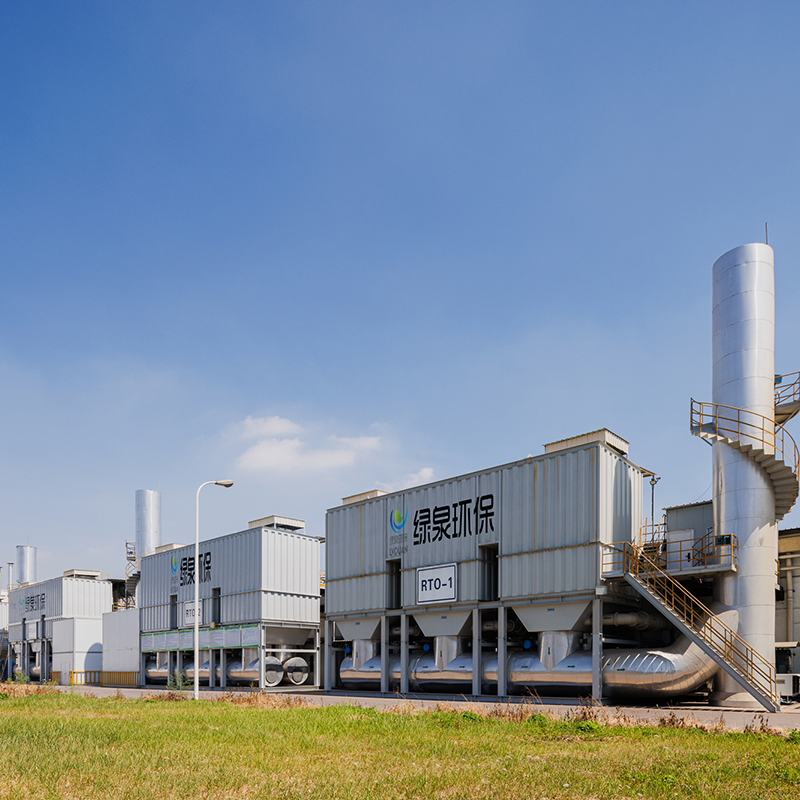
The most effective organic waste gas treatment equipment is selected by matching the pollutant's characteristics to the technology's proven performance. For high-concentration VOCs (>5,000 mg/m³) with recovery value, choose adsorption (carbon bed) or condensation; for medium concentrations (1,000-5,000 mg/m³), thermal oxidation (regenerative thermal oxidizer, RTO) achieves >98% destruction efficiency; for low concentrations (<1,000 mg/m³), biological filters or rotational concentrators paired with RTO offer the lowest lifecycle cost. Always verify compliance with local EPA equivalent standards (e.g., 40 CFR part 60 subpart Kb for US facilities).

This guide provides a step-by-step technical and economic framework to avoid overspending or non-compliance. Below we break down selection criteria, comparative data, and frequently asked questions from industrial buyers.

Critical Selection Parameters with Industry Benchmarks

Before evaluating equipment models, quantify these four parameters. A 2023 study of 150 chemical plants showed that 78% of system failures or cost overruns resulted from inaccurate flow rate or humidity data.

1. Inlet Concentration (mg/m³ as total VOCs)

Use PID or FID real-time monitoring for at least 72 hours of production. For paint spray booths, typical range is 200-800 mg/m³; for printing presses, 1,500-4,000 mg/m³; for chemical batch reactors, up to 25,000 mg/m³. Below 1,000 mg/m³, thermal oxidation alone is energy-inefficient; above 10,000 mg/m³, direct flame incineration may require explosion-proof design and heat recovery.

2. Volumetric Flow Rate (Nm³/h)

Measure at stack conditions and normalize to 20°C, 101.3 kPa. For flow >50,000 Nm³/h, a zeolite rotor concentrator reduces processed volume by 85-95%, allowing a smaller RTO. For <5,000 Nm³/h, catalytic oxidation (recuperative type) has lower capital cost.

3. Relative Humidity and Particulate Load

Activated carbon loses up to 60% adsorption capacity above 60% RH. Install pre-filter (MERV 13 or higher) if particulate >5 mg/m³. For sticky aerosols (e.g., resin curing), a scrubber or electrostatic precipitator must precede the main abatement unit.

4. Destruction Efficiency Required by Permit

Most US state permits require 95-98% DRE (destruction and removal efficiency). RTO and catalytic oxidizers achieve 99%+; carbon adsorbers typically 90-95% unless regenerated frequently. For halogenated VOCs (chlorinated solvents), a scrubber after oxidation is mandatory to prevent dioxin formation.

Technology Comparison Table: 6 Common Systems

The table below summarizes data from 40 industrial installations (2022-2024) and manufacturer specifications. Use it to shortlist candidates.

Table 1: Technical and economic comparison of organic waste gas treatment equipment (based on 10,000 Nm³/h, 1,500 mg/m³ inlet VOCs, 8,000 h/year operation)
Technology Typical DRE (%) CapEx ($/Nm³/h) OpEx ($/year) Best for
Regenerative Thermal Oxidizer (RTO) 99% $80-120 $45,000-70,000 Mixed solvents, steady flow
Rotary Concentrator + RTO 98% $150-200 $30,000-50,000 High flow, low concentration
Catalytic Oxidizer (Recuperative) 95-98% $60-90 $55,000 (catalyst replacement every 3-5y) Ethanol, acetone, low sulfur
Activated Carbon Adsorption (Regenerable) 90-95% $40-70 $25,000-40,000 + steam cost Solvent recovery (toluene, xylene)
Biological Trickling Filter 70-90% $30-50 $15,000-25,000 Low load, hydrophilic VOCs (ethanol)
Condensation (Mechanical) 80-99% (depends on vapor pressure) $200-400 $70,000-120,000 (refrigeration) High boiling point, high value (styrene, MMA)

Key insight: For applications requiring >98% DRE at moderate flow, RTO is the industry standard. However, if you can recover solvent worth >$0.50/kg, regenerable carbon pays back in <2 years.

Frequently Asked Questions (FAQ) about Organic Waste Gas Treatment Equipment

Q1: What is the cheapest option for small flow (<2,000 Nm³/h) and intermittent operation?

Answer: A dual-bed activated carbon adsorber with manual regeneration (change-out every 6-12 months). Capital cost as low as $15,000-25,000. For very intermittent use (e.g., 500 hours/year), disposable carbon (non-regenerable) can be cost-effective even if DRE is only 85% – but check permit limits. Never use disposable carbon for halogenated VOCs because spent carbon becomes hazardous waste, raising disposal cost to $1.50-3.00/kg.

Q2: My VOC contains sulfur (e.g., mercaptans from rendering). Can I use a catalytic oxidizer?

Answer: No – sulfur compounds permanently poison noble metal catalysts (platinum/palladium) even at 10 ppm. Use a thermal oxidizer (RTO) instead, followed by a caustic scrubber for SO₂ removal. Alternatively, a biofilter with specific sulfur-oxidizing bacteria (e.g., Thiobacillus) can achieve 90-95% removal for mercaptans at low concentration (<200 mg/m³).

Q3: How often should I replace activated carbon in a adsorber handling toluene at 2,000 mg/m³ and 5,000 Nm³/h?

Answer: Theoretical working capacity is ~10% of carbon weight (for fresh, high-quality coal-based carbon). For a 2,000 kg carbon bed, working capacity = 200 kg toluene. At loading of 10 kg/h toluene (2,000 mg/m³ * 5,000 m³/h / 1e6), breakthrough occurs after 20 hours. Therefore, regenerate at least every 16 hours using superheated steam (110-140°C) or hot nitrogen. Without regeneration, you need 30-40 carbon change-outs per year – financially impossible.

Q4: Is a UV-photocatalytic oxidizer effective for industrial compliance?

Answer: Almost never. Independent tests (e.g., California Air Resources Board, 2021) show UV-PCO achieves <50% DRE for most VOCs at residence times <2 seconds. They are marketed for <500 CFM odor control in restaurants, not for regulated organic waste gas. Do not rely on UV alone if your permit requires >90% destruction.

Q5: What are the hidden costs in a thermal oxidizer system?

Answer: Beyond the equipment, budget for: (1) Natural gas line upgrade – RTOs need 0.5-1.5 MMBtu/hr for start-up and low-VOC periods; (2) Electrical for VFD fans – typically 30-75 kW for 10,000 Nm³/h; (3) Ceramic media replacement every 5-8 years ($15,000-30,000); (4) Permit application and stack testing – $5,000-15,000 per test. A 2023 survey found that actual TCO (total cost of ownership) over 10 years averages 2.7x the purchase price for RTOs.

Step-by-Step Selection Workflow (Avoiding Pitfalls)

Follow this sequence to create a shortlist and request vendor quotes. Each step is based on EPA's "Control Techniques Guidelines" and real-world procurement data.

  1. Characterize gas stream fully – measure VOCs (GC-FID), humidity, particulates, temperature, and presence of siloxanes or halogens. Missing chlorine data has led to catastrophic corrosion in 22% of RTO installations.
  2. Set target outlet concentration – usually 50 mg/m³ or 10% of inlet, whichever is stricter. Verify against local regulation (e.g., EU Industrial Emissions Directive).
  3. Calculate minimum required DRE = (Cin – Cout)/Cin. If DRE >98%, only RTO, catalytic oxidizer, or two-stage carbon works.
  4. Apply the "Concentration * Flow" rule: If (Cin x Q) > 50 kg/h, thermal oxidation with heat recovery is mandatory for economic operation; if <10 kg/h, adsorption or biofiltration is feasible.
  5. Check for recoverable solvent – If solvent purchase price > $1.00/kg and you can recover >80%, use condensation or carbon adsorption with distillation unit. Payback period often <18 months.
  6. Request performance guarantees in writing – Vendors must guarantee DRE and pressure drop at your specific conditions. Include a penalty clause for failure during stack test.

Real example: A flexible packaging printer followed this workflow and chose a rotary concentrator + RTO. Inlet: 120,000 Nm³/h at 350 mg/m³ ethanol/toluene. After concentration, only 12,000 Nm³/h entered a 2-chamber RTO. Total installed cost: $1.2M. Annual natural gas consumption: 2,800 MMBtu (vs 22,000 MMBtu without concentrator). Saved $185,000/year in fuel, payback 4.1 years.

Compliance and Safety Non-Negotiables

Even the most efficient equipment fails if safety and monitoring are not integrated. The following items are required by NFPA 86 (for ovens and furnaces) and OSHA 1910.106 (for flammable vapors).

Mandatory Safety Features for Oxidizers

  • Explosion relief vents (rupture panels) sized to NFPA 68 – for a 10,000 Nm³/h RTO, total vent area typically 0.5-1.0 m².
  • Flame arrestor and high-integrity pressure protection system (HIPPS) if LEL >25%.
  • Continuous LEL monitoring with interlock – if LEL exceeds 25%, oxidizer shuts down and vents to atmosphere (or to a flare).

Continuous Monitoring Requirements (US EPA 40 CFR Part 60)

  • Parametric monitoring of combustion temperature (every 15 minutes) – must stay above 815°C for RTOs treating non-halogenated VOCs.
  • Annual stack test for VOC concentration (Method 25A or 18).
  • For carbon adsorbers: weekly breakthrough monitoring using portable PID or fixed VOC detector after the bed.

Failure to install these safety systems has caused three reported explosions in US printing plants between 2018-2023, with average damages exceeding $3M. Always require a third-party hazard review (HAZOP or LOPA) before final acceptance.

前の投稿 What are the functions of Horizontal spray cabinet?
次の投稿 What is the VOC Concentrator?

関連製品

  • LQ-RTO熱貯蔵高温焼却装置

    LQ-RTO熱貯蔵高温焼却装置

    Cat:装置

    タワータイプRTOの概要 再生熱酸化剤(RTO)は、高温酸化とマルチ塔の熱貯蔵技術を組み合わせた有機廃棄物ガス処理装置です。それは効果的に熱損失を減らし、エネルギーを節約します。

    詳細を参照してください

  • LQ-RRTOロータリー熱貯蔵量高温焼却装置

    LQ-RRTOロータリー熱貯蔵量高温焼却装置

    Cat:装置

    タワータイプRTOの概要 当社は、2種類のロータリーRTOを提供しています。これは、ロータリーRTOとシングルバレルマルチバルブRTOです。 ロータリーRTOは、回転エネルギー貯蔵酸化炉としても知られており、可燃性廃棄物ガスを対応する酸化物と高温下で酸化し、排気ガ...

    詳細を参照してください
  • lq-direct fired高温焼却浄化装置(炉へ)

    lq-direct fired高温焼却浄化装置(炉へ)

    Cat:装置

    概要 略された直接燃焼高温焼却装置は、補助燃料の燃焼によって生成される熱を利用して、反応温度への可燃性有害ガスの温度を上げ、したがってガスの酸化と分解を誘導します。

    詳細を参照してください
  • LQ-Co触媒燃焼装置

    LQ-Co触媒燃焼装置

    Cat:装置

    概要 触媒燃焼は、触媒を使用して低温で排気ガスの可燃性物質を酸化して分解する精製方法です。したがって、触媒燃焼は触媒化学変換としても知られています。触媒は酸化と分解のプロセスを加速するため、炭化水素は250〜300℃の温度で触媒によって完全に酸化することができます。 ...

    詳細を参照してください
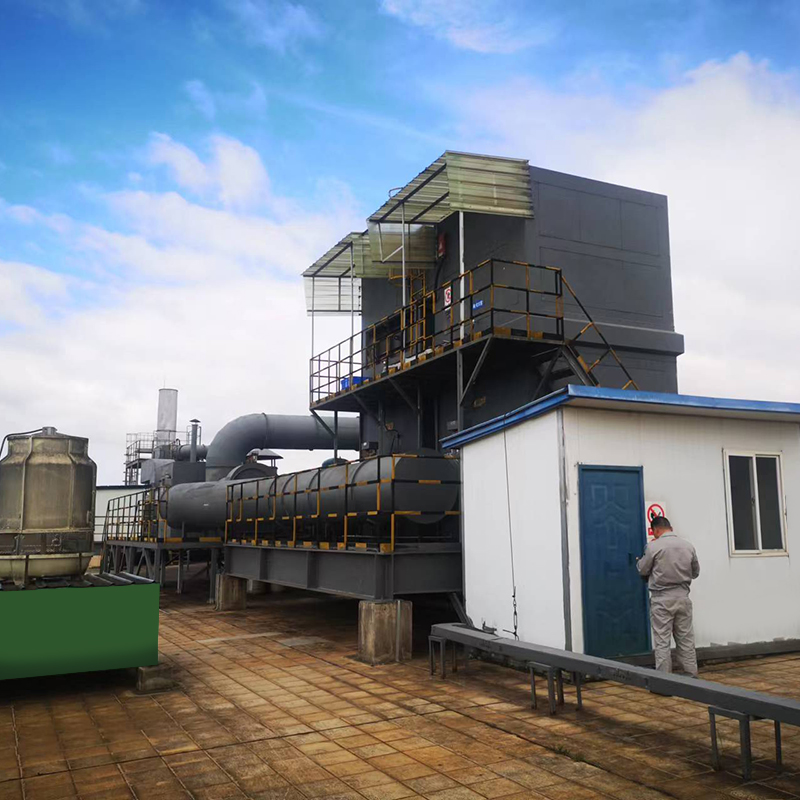
  • LQ-ACA粒状活性炭吸着および凝縮回収システム

    LQ-ACA粒状活性炭吸着および凝縮回収システム

    Cat:エンジニアリング

    概要 VOC-ACAシリーズ有機ガス粒子炭素精製および回復装置は、ベンゼン、アルコール、ケトン、エーテル、フェノール、ガソリンなどの有機廃棄物ガスの吸収、回収、および再利用に使用されます。

    詳細を参照してください
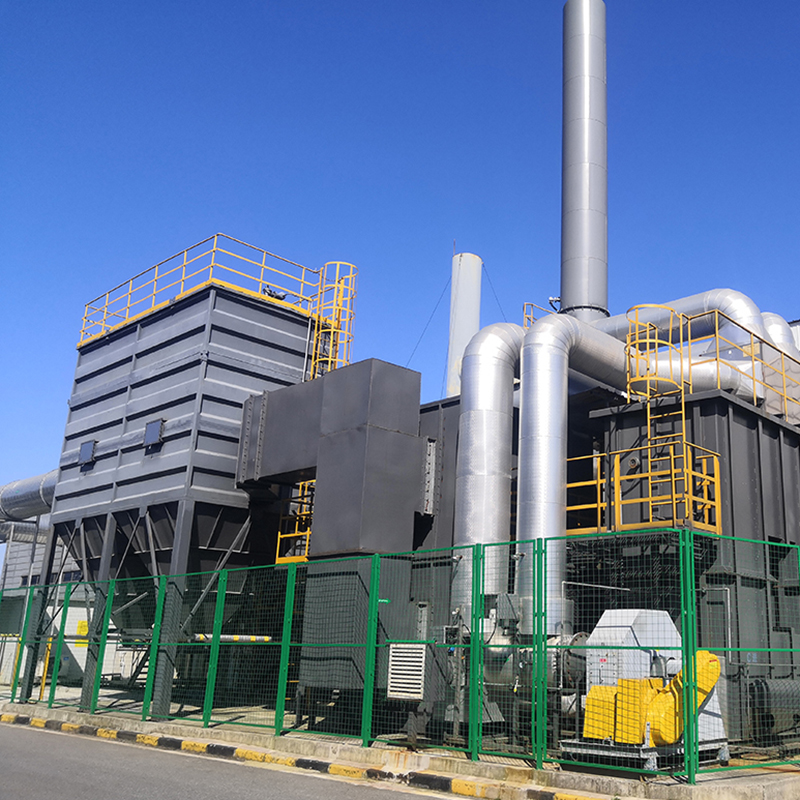
  • LQ-ADW-RTOゼオライトロータリーコンセントレーター(円筒形/ディスクタイプ)+再生熱酸化剤(RTO)

    LQ-ADW-RTOゼオライトロータリーコンセントレーター(円筒形/ディスクタイプ)+再生熱酸化剤(RTO)

    Cat:エンジニアリング

    機器の完全なセットの概念 有機廃棄物ガスにロータリードラムゼオライトの吸着を使用する目的は、低濃度の大濃度の排気を高濃度の低容量の流れに集中させることです。このプロセスにより、機器のコストと運用費用が削減され、効率的なVOC治療が達成されます。脱着と再生のために触媒燃焼からの高...

    詳細を参照してください
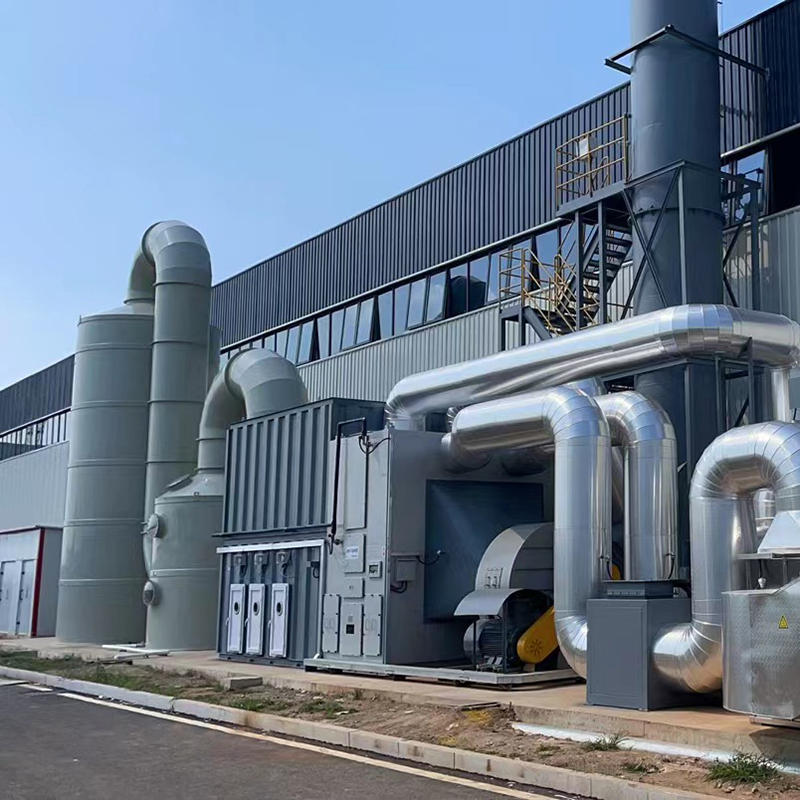
  • LQ-CF-CO固定ベッドゼオライト吸着 +触媒酸化(CO)

    LQ-CF-CO固定ベッドゼオライト吸着 +触媒酸化(CO)

    Cat:エンジニアリング

    一連の機器としての固定ベッドゼオライト触媒燃焼の概念 固定床ゼオライト触媒燃焼装置は、低濃度、断続的な生産(造船業など)、およびUV塗料やスチレンなどの揮発性有機化合物の濃度と吸着処理に適しています。継続的な安定した操作、治療空気量、治療廃棄物ガス濃度、排出濃度において独自の利...

    詳細を参照してください
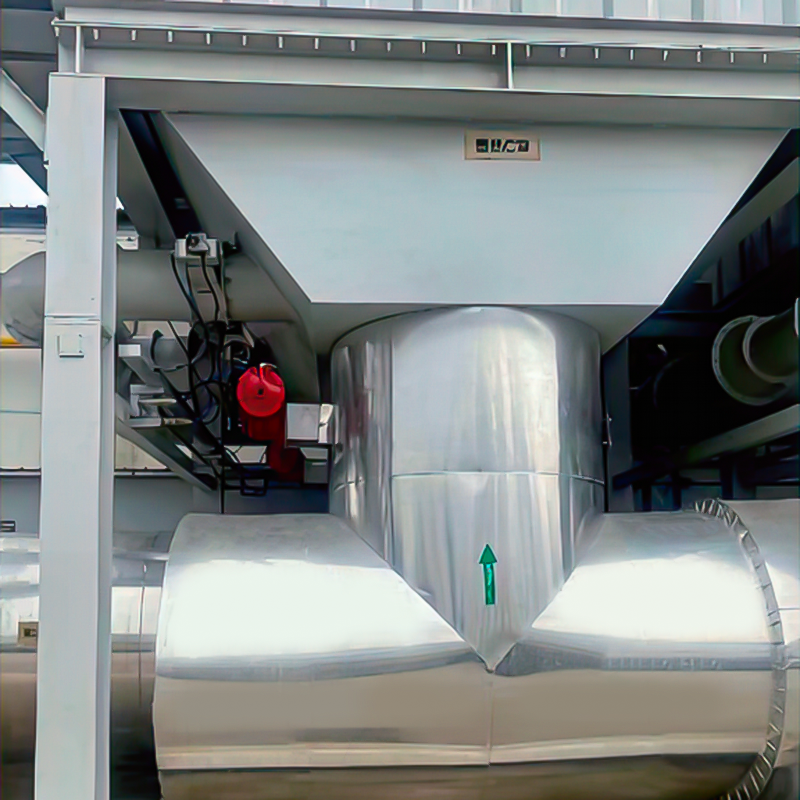
  • LQ-Adw-to Zeoliteロータリーコンセントレーター(円筒形/ディスクタイプ)+熱酸化剤(to)

    LQ-Adw-to Zeoliteロータリーコンセントレーター(円筒形/ディスクタイプ)+熱酸化剤(to)

    Cat:エンジニアリング

    ゼオライトホイール直接燃焼の概念高温焼却装置 有機廃棄物ガスにロータリードラムゼオライトの吸着を使用する目的は、低濃度の大濃度の排気を高濃度の低容量の流れに集中させることです。このプロセスにより、機器のコストと運用費用が削減され、効率的なVOC治療が達成されます。高温脱着後、高...

    詳細を参照してください
  • LQ-GXF高温圧圧バルブ

    LQ-GXF高温圧圧バルブ

    Cat:アクセサリー

    目的 主に高温煙道ガスの比例換気に使用されます。 LTは、RTOやその他の高温煙の直接排出場所など、漏れレートの要件が高くない場所で広く使用されています。主に蝶のバルブ本体と一致する空気圧アクチュエータ(GT/RT/AT/AWシリーズ)で構成されており、低圧パイプライン培地のス...

    詳細を参照してください
  • LQ-WPG水平スプレーキャビネット

    LQ-WPG水平スプレーキャビネット

    Cat:アクセサリー

    概要 ウェットダスト除去の原理は、ガス液体の2相に完全に接触することにより、気相でダスト粒子を捕獲および分離するプロセスを使用します。 現在、一般的に使用される構造形式は次のとおりです。 1. 水貯蔵:一定量の水が設置され、高速粉塵を含むガスがヒットして...

    詳細を参照してください
カテゴリ
  • 装置
  • エンジニアリング
  • アクセサリー
US にお問い合わせください
クイックリンク
  • 家
  • 製品
    • 装置
    • エンジニアリング
    • アクセサリー
  • ソリューション
    • 石油化学産業
    • 製薬、化学産業
    • コーティング業界
    • 機械産業
    • 絵画産業
    • エレクトロニクス業界
  • 能力
    • R&D
    • サービス
    • 製造
  • 私たちについて
    • 証明書
    • 工場
  • ニュース
    • 会社のニュース
    • 業界のニュース
    • 展示ニュース
  • お問い合わせ
ニュース
  • What Materials Can Be Processed in an LQ-SWI Incinerator?
  • What Is Fixed Bed Zeolite Adsorption Catalytic Oxidation?
連絡してください

No.100 Central Avenue、南経済ニューレア、Gaoyou市、江蘇省、中国

E-MAIL : [email protected]

PHONE : +86-13382748801

TEL : +86-0514-84753397

携帯

wechat

LV Quan Environmental Protection Engineering Technology Co.、Ltd。

PDF

LV Quan Environmental Protection Engineering Technology Co.、Ltd。

Copyright © LV Quan Environmental Protection Engineering Technology Co.、Ltd。 All Rights Reserved.   VOCS有機廃棄物ガス処理工学機器メーカー

LV Quan Environmental Protection Engineering Technology Co.、Ltd。