LV Quan Environmental Protection Engineering Technology Co.、Ltd。
  • 家
  • 製品
    • 装置
    • エンジニアリング
    • アクセサリー
  • ソリューション
    • 石油化学産業
    • 製薬、化学産業
    • コーティング業界
    • 機械産業
    • 絵画産業
    • エレクトロニクス業界
  • 能力
    • R&D
    • サービス
    • 製造
  • 私たちについて
    • 証明書
    • 工場
  • ニュース
    • 会社のニュース
    • 業界のニュース
    • 展示ニュース
  • お問い合わせ
LV Quan Environmental Protection Engineering Technology Co.、Ltd。
  • 日本語
  • Latine
  • 한국어
  • ไทย
  • বাংলা
  • Hrvatski
  • čeština
  • dansk
  • Nederlands
  • Deutsch
  • Pilipino
  • Indonesia
  • Suomalainen
  • italiano
  • Gaeilge
  • Bahasa Melayu
  • norsk
  • فارسی
  • Polskie
  • Português
  • Română
  • Slovák
  • Türk
  • svenska
  • Tiếng Việt
LV Quan Environmental Protection Engineering Technology Co.、Ltd。

Webメニュー

  • 家
  • 製品
    • 装置
    • エンジニアリング
    • アクセサリー
  • ソリューション
    • 石油化学産業
    • 製薬、化学産業
    • コーティング業界
    • 機械産業
    • 絵画産業
    • エレクトロニクス業界
  • 能力
    • R&D
    • サービス
    • 製造
  • 私たちについて
    • 証明書
    • 工場
  • ニュース
    • 会社のニュース
    • 業界のニュース
    • 展示ニュース
  • お問い合わせ

製品検索

言語

  • 日本語
  • Latine
  • 한국어
  • ไทย
  • বাংলা
  • Hrvatski
  • čeština
  • dansk
  • Nederlands
  • Deutsch
  • Pilipino
  • Indonesia
  • Suomalainen
  • italiano
  • Gaeilge
  • Bahasa Melayu
  • norsk
  • فارسی
  • Polskie
  • Português
  • Română
  • Slovák
  • Türk
  • svenska
  • Tiếng Việt

共有

メニューを終了します

  • 業界のニュース
    家 / ニュース / 業界のニュース / What is the VOC Concentrator?

What is the VOC Concentrator?

A VOC concentrator is an industrial air pollution control device that captures dilute volatile organic compound (VOC) emissions from process exhaust streams and concentrates them into a smaller, higher-concentration airflow before sending them to a downstream destruction unit such as a regenerative thermal oxidizer (RTO) or catalytic oxidizer. The core benefit: it can reduce the volume of air requiring treatment by up to 95%, dramatically cutting energy and operating costs.

In practical terms, if a facility exhausts 100,000 m³/h of air containing 300 mg/m³ of VOCs, a concentrator can compress that pollutant load into just 5,000–10,000 m³/h at 3,000–6,000 mg/m³ — a concentration ratio of 10:1 to 20:1. This concentrated stream is far more economical to incinerate or oxidize than the original dilute exhaust.

The Role of a VOC Concentrator in Emission Control

VOC concentrators serve as a critical bridge between raw industrial exhaust and final destruction technologies. Their role extends across three key functions:

1. Enabling Cost-Effective Destruction

Thermal oxidizers are expensive to run at low VOC concentrations because supplemental fuel is required. By concentrating VOCs to levels near or above the self-sustaining combustion threshold (typically 25% of the Lower Explosive Limit), concentrators allow oxidizers to operate with little or no auxiliary fuel. This alone can reduce operating energy costs by 60–80% compared to treating the raw dilute stream directly.

2. Regulatory Compliance

Environmental regulations such as the U.S. EPA's National Emission Standards for Hazardous Air Pollutants (NESHAPs), China's GB 37822-2019, and the EU's Industrial Emissions Directive set strict VOC emission limits. A concentrator system paired with an oxidizer routinely achieves destruction and removal efficiencies (DRE) above 99%, making compliance achievable even for large-volume, low-concentration exhaust streams.

3. Protecting Downstream Equipment

Concentrators also act as pre-treatment buffers. By adsorbing and smoothing out peak VOC surges before they reach the oxidizer, they protect downstream equipment from damaging concentration spikes and improve overall system stability.

Types of VOC Concentrators

The three dominant technologies differ in rotor medium, airflow design, and target application. Understanding each type is essential before evaluating any system.

Zeolite Rotor Concentrators

The most widely deployed technology. A honeycomb rotor impregnated with hydrophobic zeolite rotates continuously through adsorption, desorption, and cooling zones. Process air flows through the adsorption zone, VOCs are captured, and a small hot air stream desorbs them in the desorption zone, producing the concentrated output.

  • Concentration ratio: typically 10:1 to 20:1
  • Suitable for airflows from 10,000 to 500,000+ m³/h
  • Works well with most non-polar VOCs (aromatics, ketones, esters, alcohols)
  • Less effective for high-humidity streams (>90% RH) without pre-drying

Activated Carbon Fiber (ACF) Concentrators

Uses activated carbon fiber beds in a rotating or fixed-bed configuration. ACF has a higher adsorption capacity for low-concentration VOCs compared to granular activated carbon and can handle a broader spectrum of compounds including some polar VOCs.

  • Concentration ratio: up to 15:1
  • Higher initial cost than zeolite but better for polar solvents like methanol and acetone
  • Requires careful fire prevention design due to carbon's combustibility

Fixed-Bed Adsorption Concentrators

Uses two or more fixed beds of adsorbent (zeolite or activated carbon) that alternate between adsorption and regeneration cycles. These systems are simpler mechanically but require more footprint and careful cycle timing to maintain continuous output.

  • Best for smaller airflows or applications requiring solvent recovery rather than destruction
  • Steam regeneration variants allow recovery of valuable solvents
  • Lower concentration ratio (<10:1) compared to rotor-based systems
Type Concentration Ratio Best For Key Limitation
Zeolite Rotor 10:1 – 20:1 Large volume, non-polar VOCs High humidity reduces efficiency
ACF Rotor Up to 15:1 Polar solvents, mixed VOC streams Fire risk, higher cost
Fixed-Bed Up to 10:1 Solvent recovery, smaller flows Large footprint, batch cycling
Comparison of the three main VOC concentrator technologies by key performance parameters

How to Choose a VOC Concentrator

Selecting the right VOC concentrator requires matching system capabilities to your specific exhaust characteristics and operational goals. The following parameters are non-negotiable inputs for any proper evaluation:

Step 1 — Characterize Your Exhaust Stream

Before contacting any vendor, gather:

  • Total airflow volume (m³/h or CFM) including peak and average values
  • VOC species and concentrations (mg/m³ or ppm) — speciated if possible
  • Relative humidity — streams above 80% RH often need pre-drying
  • Temperature of the inlet air — affects adsorption equilibrium
  • Presence of particulates, silicones, or high-boiling compounds — these can blind adsorbent surfaces and require pre-filtration

Step 2 — Define Your Regulatory Target

Know the emission limit you must meet — expressed as outlet concentration (mg/m³), mass emission rate (kg/h), or overall removal efficiency (%). This determines the minimum DRE required and helps size the concentrator-oxidizer combination appropriately. Most jurisdictions now require ≥95% overall VOC removal; many require ≥99%.

Step 3 — Evaluate Adsorbent Compatibility

Not all VOCs adsorb equally on zeolite. Compounds with very low boiling points (e.g., methane, ethane) do not adsorb efficiently on zeolite rotors. Highly polar solvents like methanol may require ACF media. Always request adsorption isotherm data or pilot test results from the vendor for your specific VOC mix.

Step 4 — Total Cost of Ownership (TCO) Analysis

Capital cost is only part of the picture. Evaluate:

  • Energy consumption of the concentrator fan and desorption heater
  • Rotor or adsorbent replacement interval and cost (zeolite rotors typically last 5–10 years)
  • Reduction in downstream oxidizer fuel consumption — this is frequently the largest annual saving
  • Maintenance labor and spare parts availability

Step 5 — Verify Vendor Track Record

Request reference installations in your industry with similar exhaust profiles. Ask for third-party stack test data demonstrating actual DRE performance, not just design specifications. Leading suppliers such as Dürr, Anguil, Munters, and Seibu Giken publish documented case studies for this purpose.

The Best VOC Concentrators: What Sets Top Systems Apart

There is no single "best" VOC concentrator — the optimal system depends on application. However, the highest-performing systems share several measurable characteristics:

  • High concentration ratio (>15:1) — reduces downstream oxidizer size and fuel demand significantly
  • Adsorption efficiency >95% — ensures the inlet concentration is captured effectively before the concentrated stream reaches the oxidizer
  • Low pressure drop across the rotor — typically <500 Pa, minimizing fan energy consumption
  • Integrated controls and monitoring — real-time VOC inlet/outlet sensors, automated desorption temperature control, and remote diagnostics
  • Modular rotor design — allows replacement of rotor segments without full system shutdown

For large-scale automotive coating lines or electronics manufacturing exhausts (typically 50,000–300,000 m³/h), zeolite rotor systems from manufacturers like Dürr or Munters are widely benchmarked. For pharmaceutical or specialty chemical applications with complex solvent mixtures, ACF-based systems often deliver superior removal across a wider boiling-point range.

How to Use a VOC Concentrator: Operation and Maintenance Essentials

Even the best-designed VOC concentrator will underperform without correct operation. The following practices are standard across high-performing installations:

Startup and Steady-State Operation

  1. Verify pre-filter integrity before startup — particulate loading on the rotor surface is the leading cause of premature rotor degradation.
  2. Confirm desorption air temperature setpoint matches the design specification for your VOC mixture (typically 180–220°C for zeolite systems).
  3. Monitor inlet and outlet VOC concentrations continuously. An outlet VOC breakthrough above design limits typically signals rotor saturation, damage, or a process upset — not normal operation.
  4. Maintain rotor rotation speed within the design range; deviations affect the adsorption/desorption balance and overall efficiency.

Preventive Maintenance Schedule

  • Monthly: Inspect and replace inlet pre-filters; check rotor seal condition; verify rotation speed and motor current draw
  • Quarterly: Clean desorption heater elements; calibrate VOC sensors; inspect ductwork for leaks
  • Annually: Full rotor inspection — check for physical damage, channeling, or loss of adsorption capacity via spot sampling
  • Every 5–8 years: Rotor replacement assessment based on capacity testing results

Common Operational Pitfalls

  • High-boiling VOCs (boiling point >150°C) — these may not fully desorb at standard temperatures, gradually reducing rotor capacity over time. Periodic high-temperature regeneration cycles can help.
  • Silicone contamination — even trace amounts of siloxanes can permanently poison zeolite adsorption sites. Identify and eliminate silicone sources upstream.
  • Excessive humidity spikes — transient humidity surges can temporarily suppress adsorption efficiency by 20–40%. Process-side humidity controls are a valuable investment.

FAQ about VOC Concentrators

What inlet VOC concentration is required for a concentrator to be effective?

VOC concentrators are designed for dilute streams, typically 100–2,000 mg/m³. For concentrations above 3,000–5,000 mg/m³, direct oxidation without concentration is usually more economical. Below 50 mg/m³, adsorption efficiency may be marginal and alternative technologies should be evaluated.

Can a VOC concentrator handle mixed solvent streams?

Yes, provided the adsorbent medium is compatible with all compounds present. Zeolite rotors handle most aromatic, aliphatic, and ketone solvents well. For streams containing significant proportions of polar solvents (methanol, ethanol, MEK), ACF media or a mixed-media rotor may be required. Always provide a full solvent list to your system designer.

How much does a VOC concentrator system cost?

Capital costs vary widely with airflow volume and configuration. As a rough benchmark: a zeolite rotor concentrator for a 50,000 m³/h application typically ranges from $300,000 to $700,000 USD installed, excluding the downstream oxidizer. Systems for 200,000+ m³/h can exceed $1.5 million. However, fuel savings from reduced oxidizer operation commonly deliver payback periods of 2–5 years relative to treating the raw stream directly.

Is a VOC concentrator the same as a VOC scrubber?

No. A scrubber uses a liquid to absorb or neutralize pollutants and is typically used for inorganic gases (HCl, SO₂, NH₃) or water-soluble VOCs. A concentrator uses a solid adsorbent to capture and concentrate VOCs for subsequent thermal destruction. They address different pollutants and operate on entirely different principles.

Does a VOC concentrator destroy the VOCs?

No. A concentrator captures and concentrates VOCs — it does not destroy them. Destruction is performed by a downstream unit such as an RTO, catalytic oxidizer, or thermal oxidizer. The concentrator and oxidizer always function as a paired system. The concentrator's value is in reducing the size and operating cost of that downstream destruction step.

How long does a zeolite rotor last?

Under normal operating conditions with proper pre-filtration and no chemical contamination, zeolite rotors typically last 8–12 years. Exposure to silicones, heavy particulates, or high-boiling polymeric compounds can significantly shorten service life. Regular adsorption capacity testing — at least annually — is the best way to track rotor health and plan replacement proactively.

前の投稿 How to Choose Organic Waste Gas Treatment Equipment?
次の投稿 有機排ガス処理工学における安全上の問題は何ですか?

関連製品

  • LQ-RTO熱貯蔵高温焼却装置

    LQ-RTO熱貯蔵高温焼却装置

    Cat:装置

    タワータイプRTOの概要 再生熱酸化剤(RTO)は、高温酸化とマルチ塔の熱貯蔵技術を組み合わせた有機廃棄物ガス処理装置です。それは効果的に熱損失を減らし、エネルギーを節約します。

    詳細を参照してください
  • LQ-RRTOロータリー熱貯蔵量高温焼却装置

    LQ-RRTOロータリー熱貯蔵量高温焼却装置

    Cat:装置

    タワータイプRTOの概要 当社は、2種類のロータリーRTOを提供しています。これは、ロータリーRTOとシングルバレルマルチバルブRTOです。 ロータリーRTOは、回転エネルギー貯蔵酸化炉としても知られており、可燃性廃棄物ガスを対応する酸化物と高温下で酸化し、排気ガ...

    詳細を参照してください
  • lq-direct fired高温焼却浄化装置(炉へ)

    lq-direct fired高温焼却浄化装置(炉へ)

    Cat:装置

    概要 略された直接燃焼高温焼却装置は、補助燃料の燃焼によって生成される熱を利用して、反応温度への可燃性有害ガスの温度を上げ、したがってガスの酸化と分解を誘導します。

    詳細を参照してください
  • LQ-SWI固形廃棄物焼却炉

    LQ-SWI固形廃棄物焼却炉

    Cat:装置

    概要 固形廃棄物の焼却炉は、高温燃焼を通じて廃棄物とガスに廃棄物に変換するように設計された固形廃棄物の管理に不可欠な装置であり、それにより環境を浄化します。これらの炉は、給餌システム、燃焼システム、熱回収システム、煙道ガス浄化システム、灰除去システムなど、いくつかの主要...

    詳細を参照してください
  • LQ-ACF活性炭繊維有機溶媒凝縮回収装置

    LQ-ACF活性炭繊維有機溶媒凝縮回収装置

    Cat:エンジニアリング

    活性炭繊維有機溶媒浄化回収装置の概要 活性炭繊維有機溶媒溶媒浄化回収システム(ACF)は、吸着剤培地として高品質の活性炭繊維を利用する環境保護装置です。マイクロコンピューターによって制御され、完全に自動化されたこのシステムは、振動の削減、音響断熱、爆発保護、過熱および過...

    詳細を参照してください
  • LQ-ACA粒状活性炭吸着および凝縮回収システム

    LQ-ACA粒状活性炭吸着および凝縮回収システム

    Cat:エンジニアリング

    概要 VOC-ACAシリーズ有機ガス粒子炭素精製および回復装置は、ベンゼン、アルコール、ケトン、エーテル、フェノール、ガソリンなどの有機廃棄物ガスの吸収、回収、および再利用に使用されます。

    詳細を参照してください
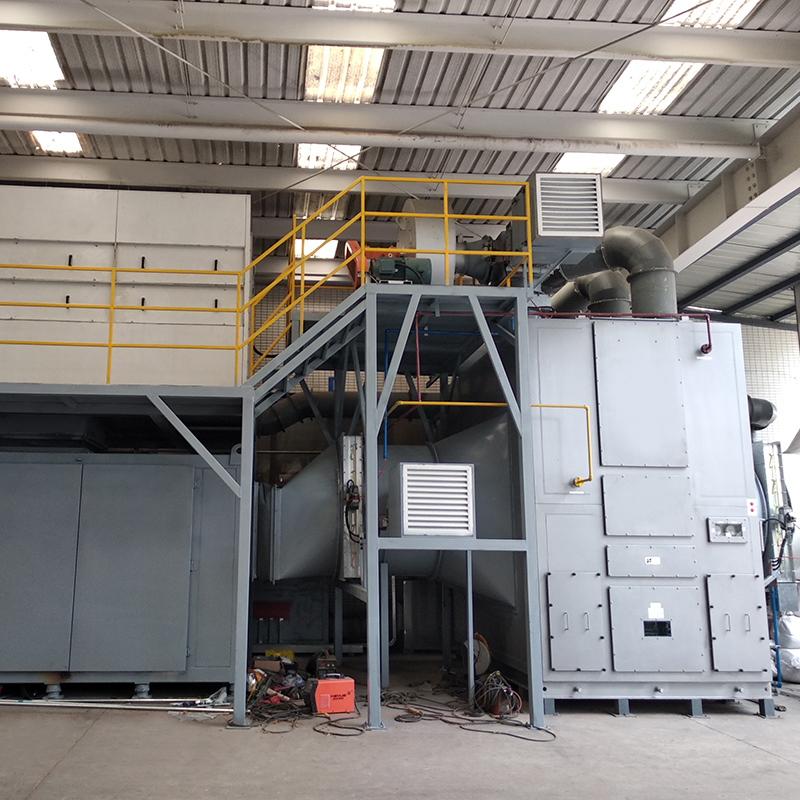
  • LQ-ADW-RTOゼオライトロータリーコンセントレーター(円筒形/ディスクタイプ)+再生熱酸化剤(RTO)

    LQ-ADW-RTOゼオライトロータリーコンセントレーター(円筒形/ディスクタイプ)+再生熱酸化剤(RTO)

    Cat:エンジニアリング

    機器の完全なセットの概念 有機廃棄物ガスにロータリードラムゼオライトの吸着を使用する目的は、低濃度の大濃度の排気を高濃度の低容量の流れに集中させることです。このプロセスにより、機器のコストと運用費用が削減され、効率的なVOC治療が達成されます。脱着と再生のために触媒燃焼からの高...

    詳細を参照してください
  • LQ-ADW-COゼオライトロータリーコンセントレーター(円筒形/discタイプ)+触媒酸化(CO)

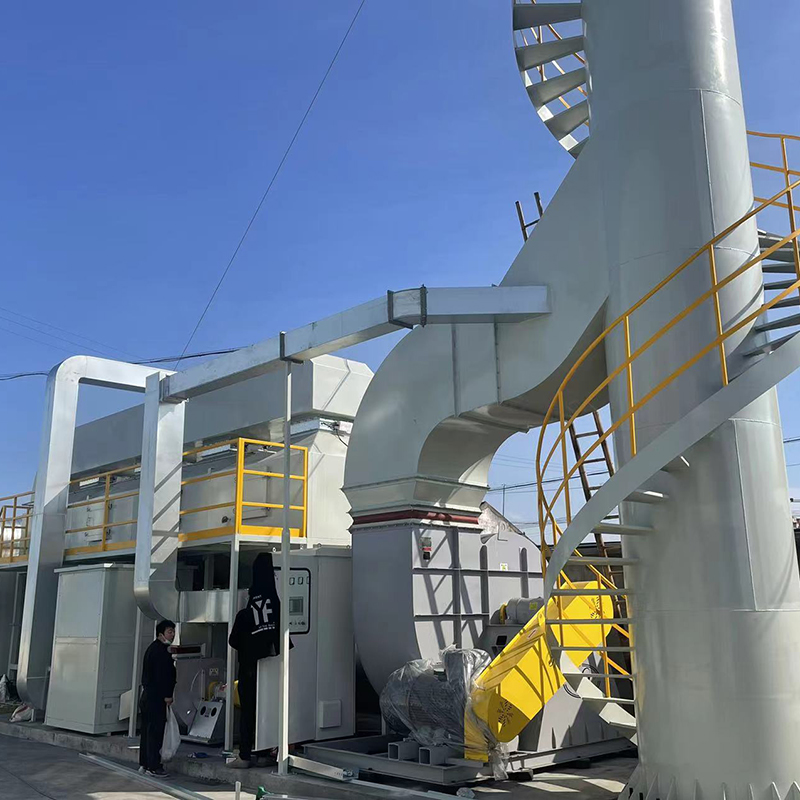
    LQ-ADW-COゼオライトロータリーコンセントレーター(円筒形/discタイプ)+触媒酸化(CO)

    Cat:エンジニアリング

    ゼオライト回転式ホイール触媒燃焼の概念は、一連の機器として 有機廃棄物ガスと廃棄ガス処理の組み合わせプロセスでは、ゼオライト回転式ホイール濃度吸着触媒燃焼装置は、主に高い空気量と低濃度の廃棄物ガスの処理に適しています。  そのコンポーネントには、触媒を毒する可能性のあるSINC...

    詳細を参照してください
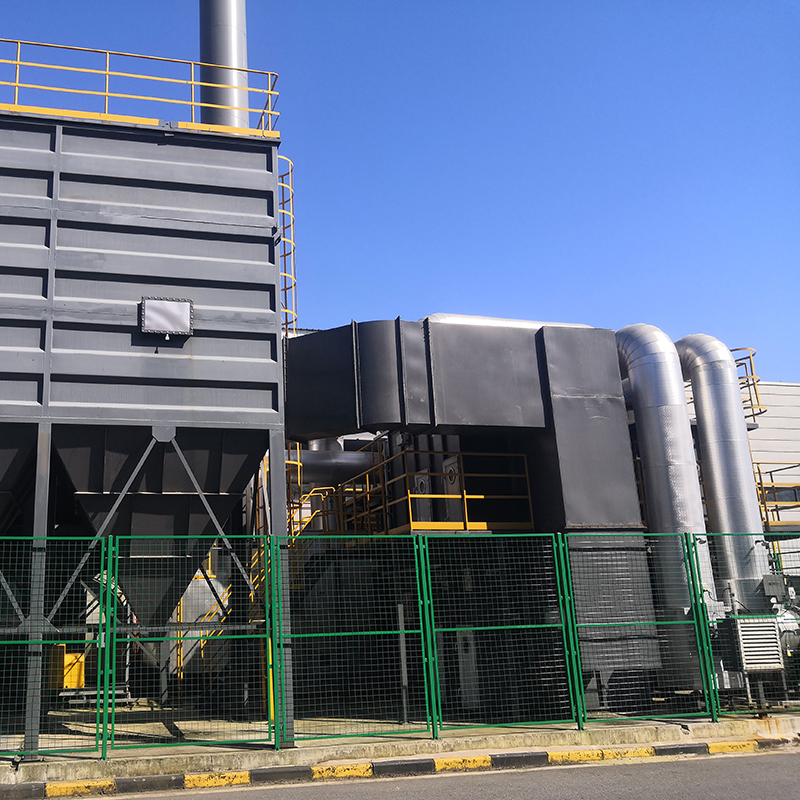
  • LQ-Adw-to Zeoliteロータリーコンセントレーター(円筒形/ディスクタイプ)+熱酸化剤(to)

    LQ-Adw-to Zeoliteロータリーコンセントレーター(円筒形/ディスクタイプ)+熱酸化剤(to)

    Cat:エンジニアリング

    ゼオライトホイール直接燃焼の概念高温焼却装置 有機廃棄物ガスにロータリードラムゼオライトの吸着を使用する目的は、低濃度の大濃度の排気を高濃度の低容量の流れに集中させることです。このプロセスにより、機器のコストと運用費用が削減され、効率的なVOC治療が達成されます。高温脱着後、高...

    詳細を参照してください
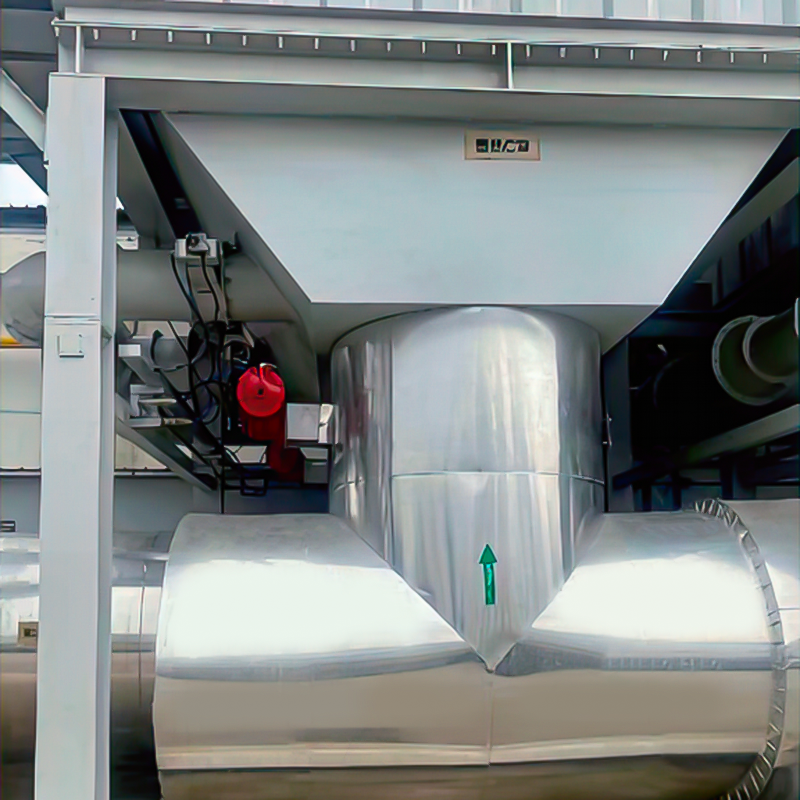
  • LQ-GXF高温圧圧バルブ

    LQ-GXF高温圧圧バルブ

    Cat:アクセサリー

    目的 主に高温煙道ガスの比例換気に使用されます。 LTは、RTOやその他の高温煙の直接排出場所など、漏れレートの要件が高くない場所で広く使用されています。主に蝶のバルブ本体と一致する空気圧アクチュエータ(GT/RT/AT/AWシリーズ)で構成されており、低圧パイプライン培地のス...

    詳細を参照してください
カテゴリ
  • 装置
  • エンジニアリング
  • アクセサリー
US にお問い合わせください
クイックリンク
  • 家
  • 製品
    • 装置
    • エンジニアリング
    • アクセサリー
  • ソリューション
    • 石油化学産業
    • 製薬、化学産業
    • コーティング業界
    • 機械産業
    • 絵画産業
    • エレクトロニクス業界
  • 能力
    • R&D
    • サービス
    • 製造
  • 私たちについて
    • 証明書
    • 工場
  • ニュース
    • 会社のニュース
    • 業界のニュース
    • 展示ニュース
  • お問い合わせ
ニュース
  • What Materials Can Be Processed in an LQ-SWI Incinerator?
  • What Is Fixed Bed Zeolite Adsorption Catalytic Oxidation?
連絡してください

No.100 Central Avenue、南経済ニューレア、Gaoyou市、江蘇省、中国

E-MAIL : [email protected]

PHONE : +86-13382748801

TEL : +86-0514-84753397

携帯

wechat

LV Quan Environmental Protection Engineering Technology Co.、Ltd。

PDF

LV Quan Environmental Protection Engineering Technology Co.、Ltd。

Copyright © LV Quan Environmental Protection Engineering Technology Co.、Ltd。 All Rights Reserved.   VOCS有機廃棄物ガス処理工学機器メーカー

LV Quan Environmental Protection Engineering Technology Co.、Ltd。